IACS Members Class Approved Repair Solutions


From inspection findings to a repair procedure
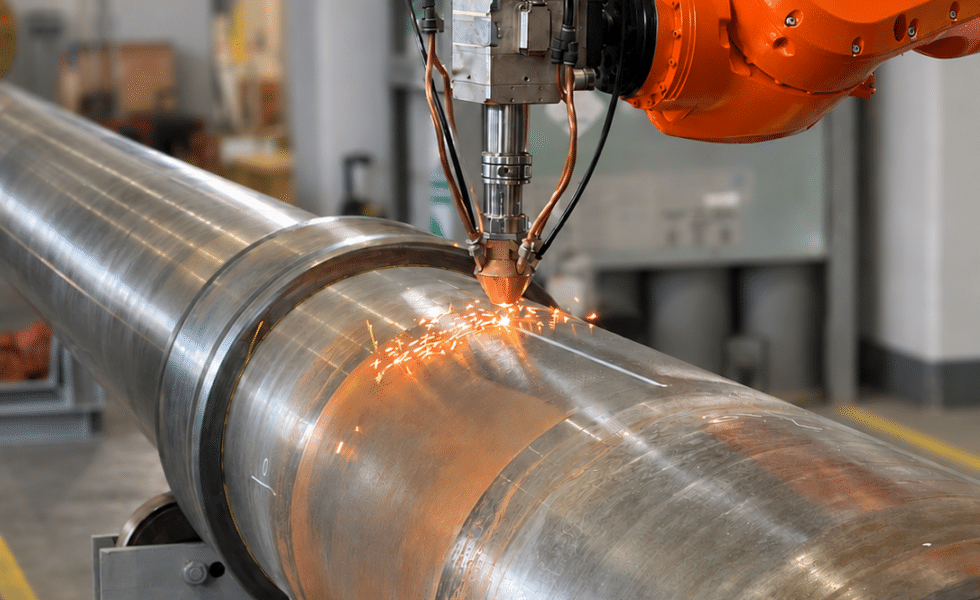
Our team examines the affected areas, records the shaft dimensions and assesses the extent of the damage. These findings guide the choice of repair method and establish which dimensions need to be checked after machining. Where the repair calls for material build-up, KIMI uses laser cladding or welding in accordance with the applicable procedure. Class-approved procedures are used within the scope of their respective approvals. Our in-house laboratory, accredited by ESYD to ISO/IEC 17025, supports material assessment through testing within its accredited scope.
Restoring shaft geometry and verifying tolerances
Depending on the inspection findings, restoration may include shaft straightening, CNC machining or precision grinding. After machining, our engineers measure the repaired surfaces against the specified dimensions and tolerances. Dimensional inspection and, where appropriate, 3D scanning provide a record of the finished geometry.
For the shipyard, the final dimensional report answers a practical question before the shaft returns to the vessel: which surfaces were restored, and what measurements confirm the result?
From workshop verification to onboard alignment
KIMI can carry the work through to onboard installation and final laser alignment. With one engineering partner coordinating the workshop and onboard stages, the shipyard has a single technical contact to review findings, plan reinstallation around the docking schedule and receive the repair documentation.
Explore the KIMI Marine Shaft Center’s shaft repair and restoration capabilities.