Why Welding Consistency Matters in Two-Stroke Engine Reconditioning
In conventional welding, travel speed and material deposition depend heavily on operator technique. Variations in speed affect heat input, while differences in deposition can alter the geometry of the rebuilt area.
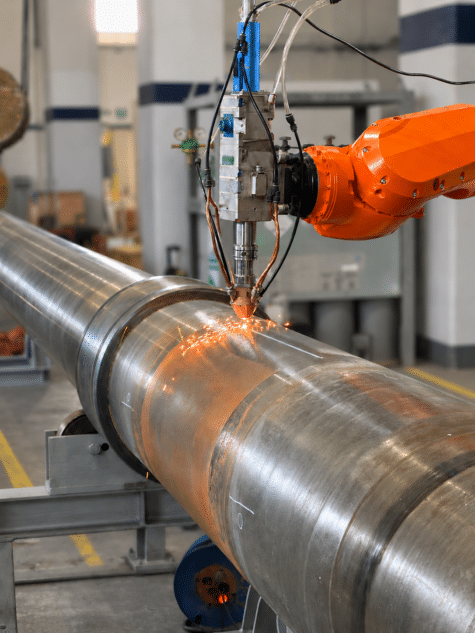
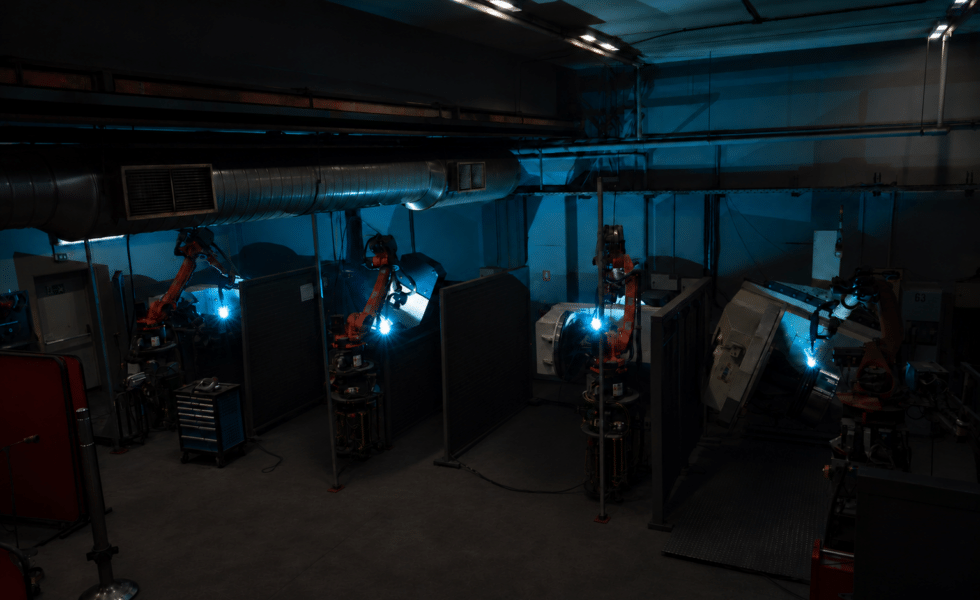
KIMI’s robotic welding systems follow defined procedures to control these parameters across successive weld passes. This reduces variability when rebuilding comparable components. Metallurgical assessment determines which materials and welding procedures suit the repair, and inspection verifies the result.
KIMI’s In-House Robotic Welding and Reconditioning Process
- 3D scanning and dimensional analysis to evaluate component condition and define restoration requirements.
- CNC pre-machining to remove damaged material and prepare surfaces for controlled deposition.
- Metallurgical assessment to determine suitable materials and welding procedures.
- AI robotic welding for consistent material deposition and repeatable welding geometry.
- Precision CNC machining to restore specified dimensions, tolerances and surface finishes.
- NDT, dimensional inspection and ISO/IEC 17025 accredited laboratory testing for verified repair quality.
The result is a controlled restoration process in which quality is assessed through technical verification, not simply the component’s final appearance.
AI Robotic Welding Applications in Two-Stroke Marine Engine Components
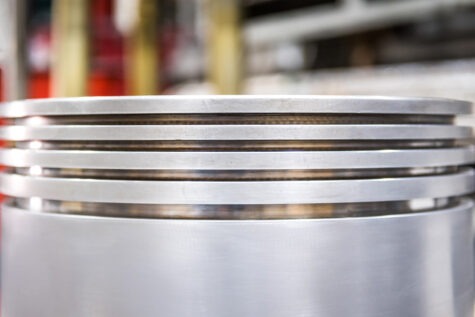
Piston Crown Reconditioning
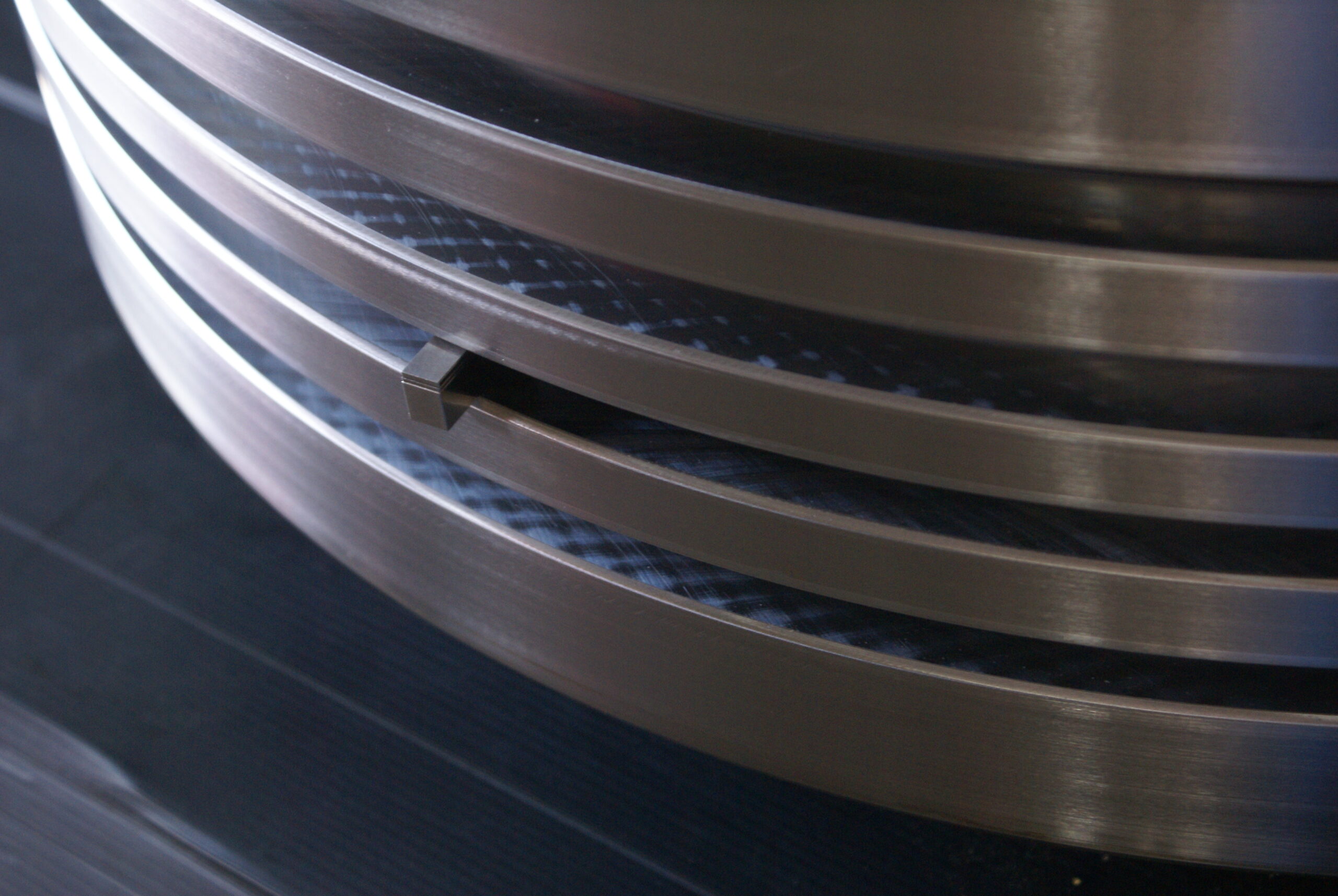
Exposed to extreme combustion temperatures and mechanical loading, piston crowns frequently experience ring-groove wear, erosion and material degradation.
Controlled robotic welding enables consistent material build-up in damaged areas, followed by precision CNC machining to restore the required geometry and tolerances.
Exhaust Valve Spindle & Seat Reconditioning
High-temperature operation and repeated thermal cycling can cause erosion, surface deterioration and sealing-surface damage.
KIMI combines controlled welding, metallurgical expertise and precision machining to restore damaged areas according to applicable technical specifications.
Cylinder Cover Reconditioning
Subjected to significant thermal and mechanical stresses, cylinder covers require carefully assessed restoration procedures.
Depending on the repair scope, KIMI integrates controlled welding with precision machining, NDT and pressure testing to verify the restored component.
What This Means for Fleet Operators
For shipowners and technical managers, a key benefit is consistent repair quality across comparable engine components. KIMI controls how material is deposited, machines each working surface to its specified geometry and checks the finished repair. One in-house team manages the process from initial assessment through final verification.