Crankshaft Machining & Annealing
High-Precision In-Situ Crankpin Machining to OEM Specifications
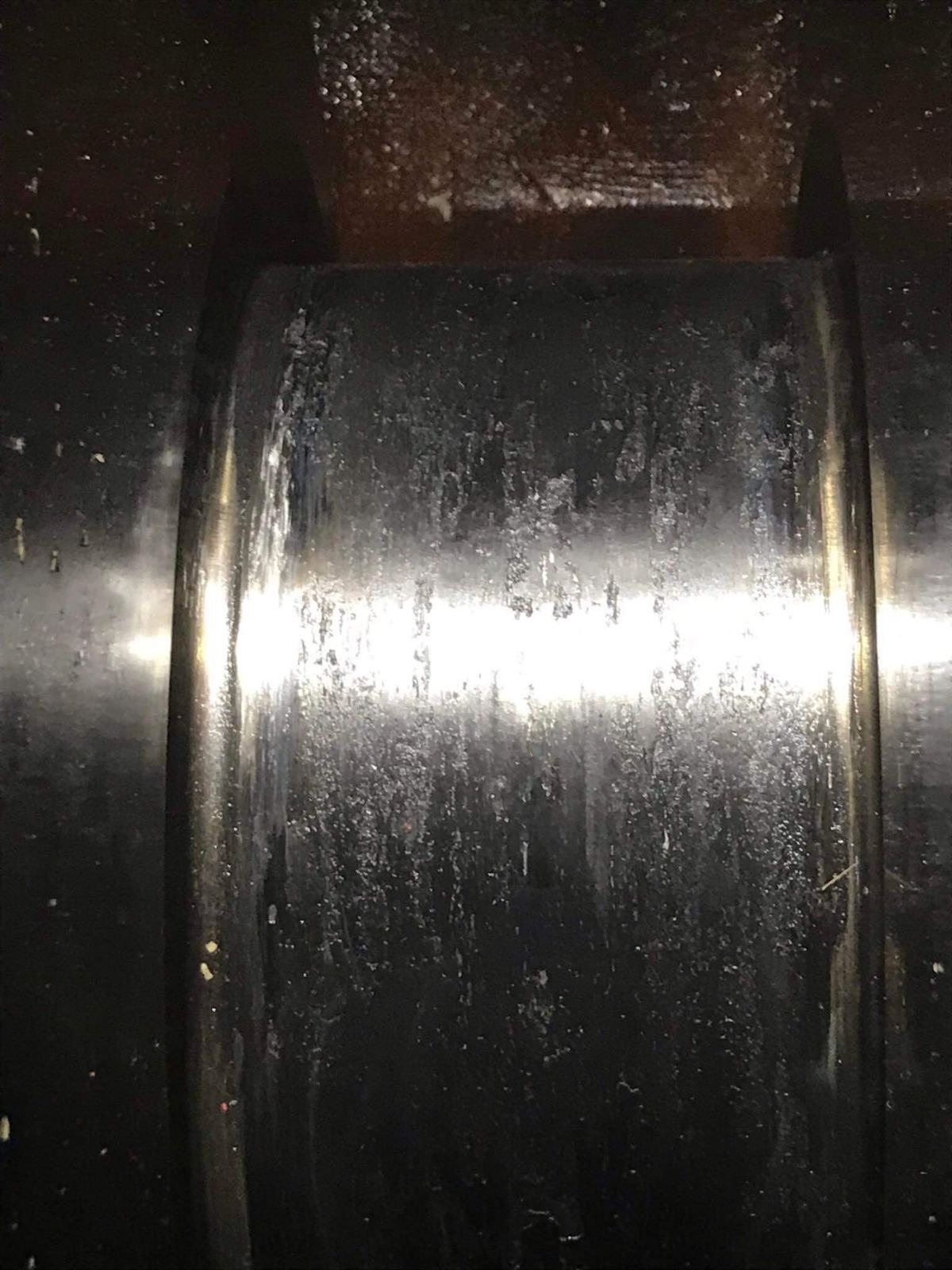
KIMI’s specialized riding teams restore damaged crankshaft journals directly onboard, eliminating the need for crankshaft removal and significantly reducing vessel downtime.
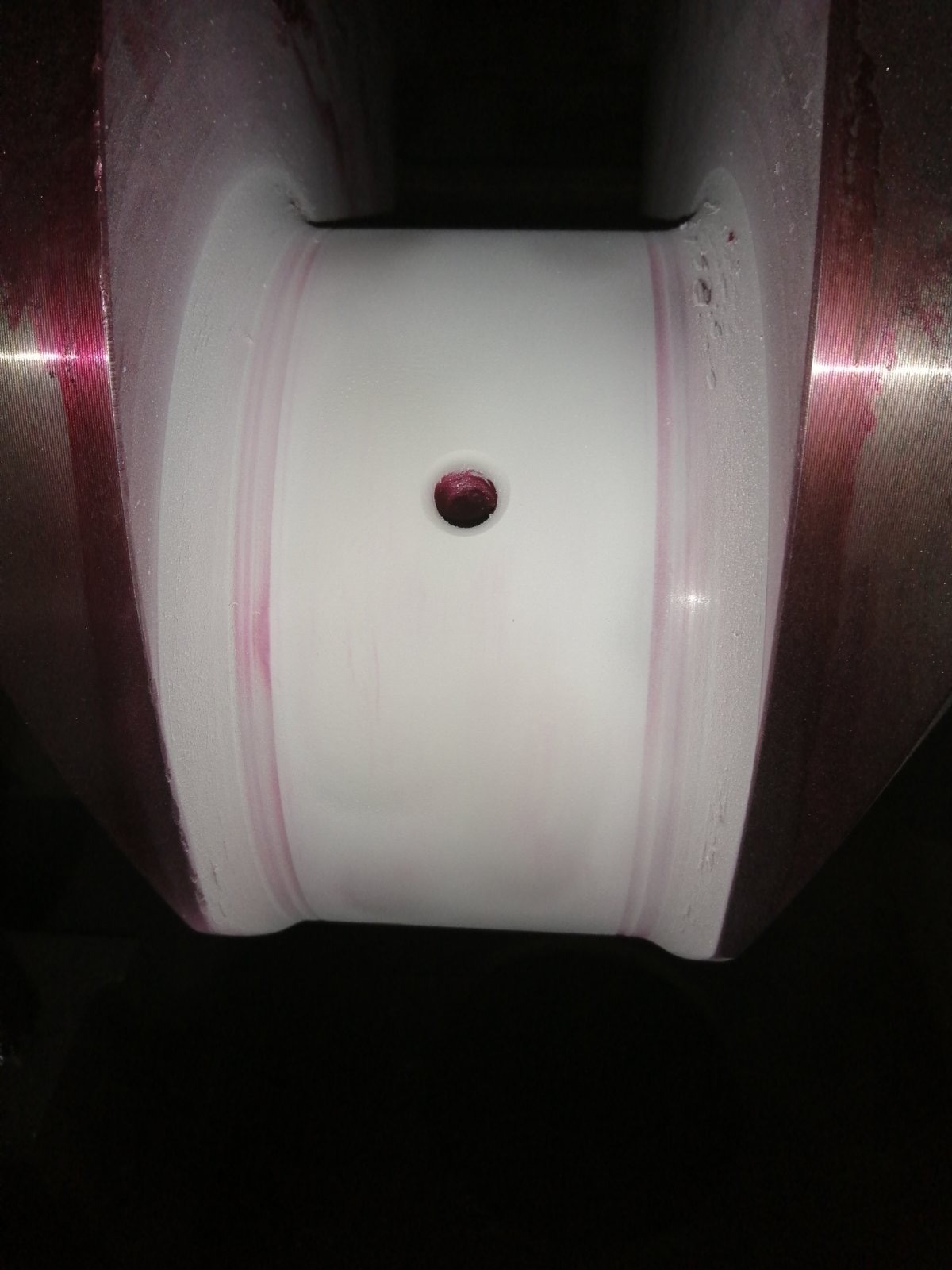
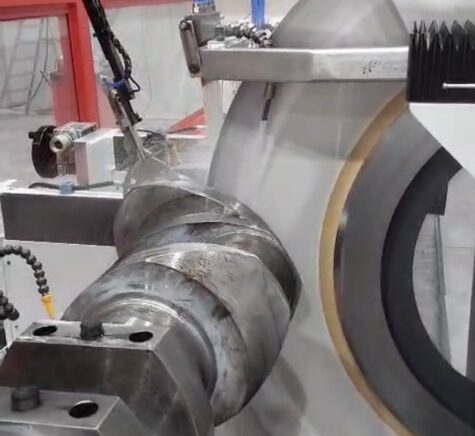
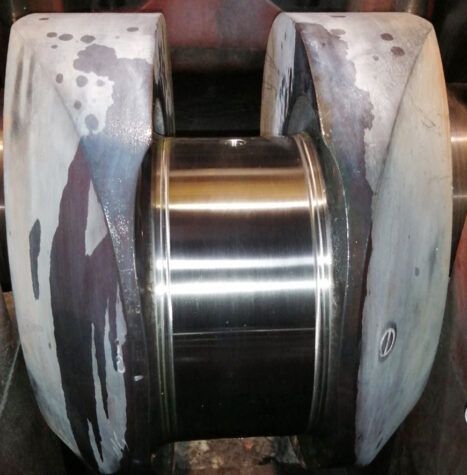
Using advanced portable machining equipment, in-situ crankpin machining and precision grinding within a diameter range of Ø135–600 mm, combined with induction annealing where required, to restore journal geometry, surface finish and material hardness to applicable OEM specifications.
Our repair process incorporates metallurgical assessment, material identification and ISO/IEC 17025-accredited hardness and surface roughness testing to verify compliance with applicable OEM specifications. Comprehensive NDT inspections (PT, MT, UT) are carried out by Level II certified personnel to assess material integrity and verify compliance with applicable Class requirements.





Customer Benefits

No Crankshaft Removal
Direct onboard restoration without major engine dismantling.

Minimized Vessel Downtime
Fast in-situ execution, reducing vessel off-hire time.

Significant Cost Savings
Avoids costly crankshaft replacement
In-Situ Crankpin Repair Process
INSPECTION & MEASUREMENT
Wear, ovality, cracks & hardness check.
MACHINE SETUP & ALIGNMENT
Installation and precise alignment of portable equipment.
PRECISION GRINDING
Restore diameter, geometry & surface finish.
INDUCTION ANNEALING - if required
Restore material hardness & properties.
Final Inspection & Certification
Dimensional check, NDT & class documentation.
Why Rely on KIMI
In-Situ Grinding Capability
Grinding Accuracy
End-to-End Crankshaft Repair Solutions
On-Site & In-house
News
FAQs
KIMI can repair worn or damaged crankpins, including scoring, ovality, taper wear, surface cracks, and hardness issues. The process includes precision grinding, induction annealing, and full NDT inspection to ensure reliable restoration.
KIMI has extensive experience working on a wide range of marine crankshafts across major engine makers. Our team has successfully completed in-situ grinding and machining on engines such as:
- Daihatsu Diesel DK series : DK20, DK22, DK28, DK32
- Yanmar engines:6EY22, 6EY28
- MAN Energy Solutions engines : L21/31, L23/30, L27/38, L28/32
- Wärtsilä engines: Wärtsilä 20, 26, 32
This broad experience enables KIMI to handle diverse crankshaft designs, sizes, and operational conditions, delivering OEM-compliant results across various 4-stroke marine engine types.
KIMI has in-house expert teams and continuously develops service capabilities. All operations are carried out by dedicated specialists—not subcontractors—ensuring full control, consistency, and quality at every stage.
With years of hands-on field experience, KIMI has developed and refined its in-situ machining services using advanced equipment, proven methodologies, and continuous technical improvement. This allows us to deliver reliable, OEM-compliant results across a broad range of crankshaft sizes and engine types.
Yes. KIMI provides complete repair solutions tailored to each case. Whenever possible, our expert teams perform in-situ crankshaft grinding onboard, minimizing downtime and avoiding engine dismantling.
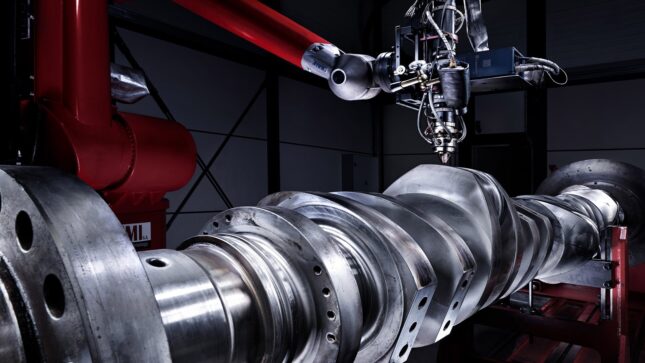
If on-site repair is not feasible due to the extent of damage or operational constraints, crankshafts can be repaired in-house using advanced processes such as laser cladding, straightening, and precision grinding, with lengths up to 7 meters. This flexible approach ensures the most efficient, reliable, and cost-effective solution while restoring components to OEM specifications.