Crankshaft Journal Reconditioning With Laser Cladding
Certified Laser Cladding Solutions for OEM-Standard Crankshaft Restoration and Durability
Crankshaft journal failure is a persistent issue affecting shipping operations—caused by inadequate lubrication, bearing damage, or handling errors. When a crankpin or main journal becomes worn, replacement of crankshaft can be extremely costly.
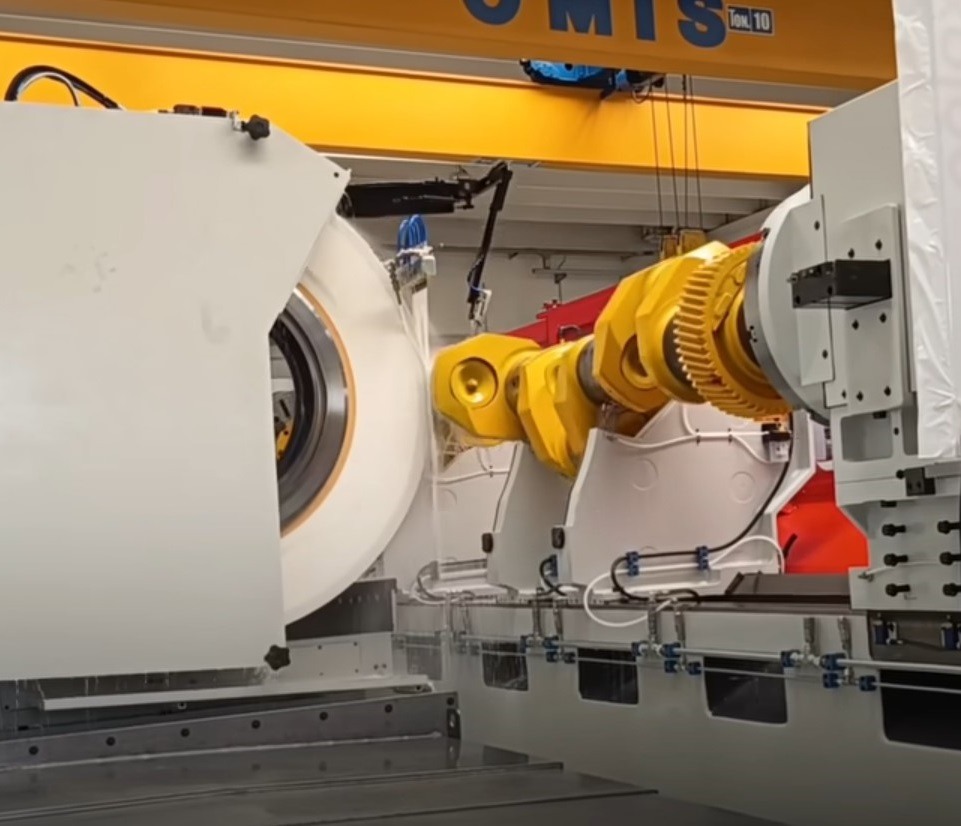
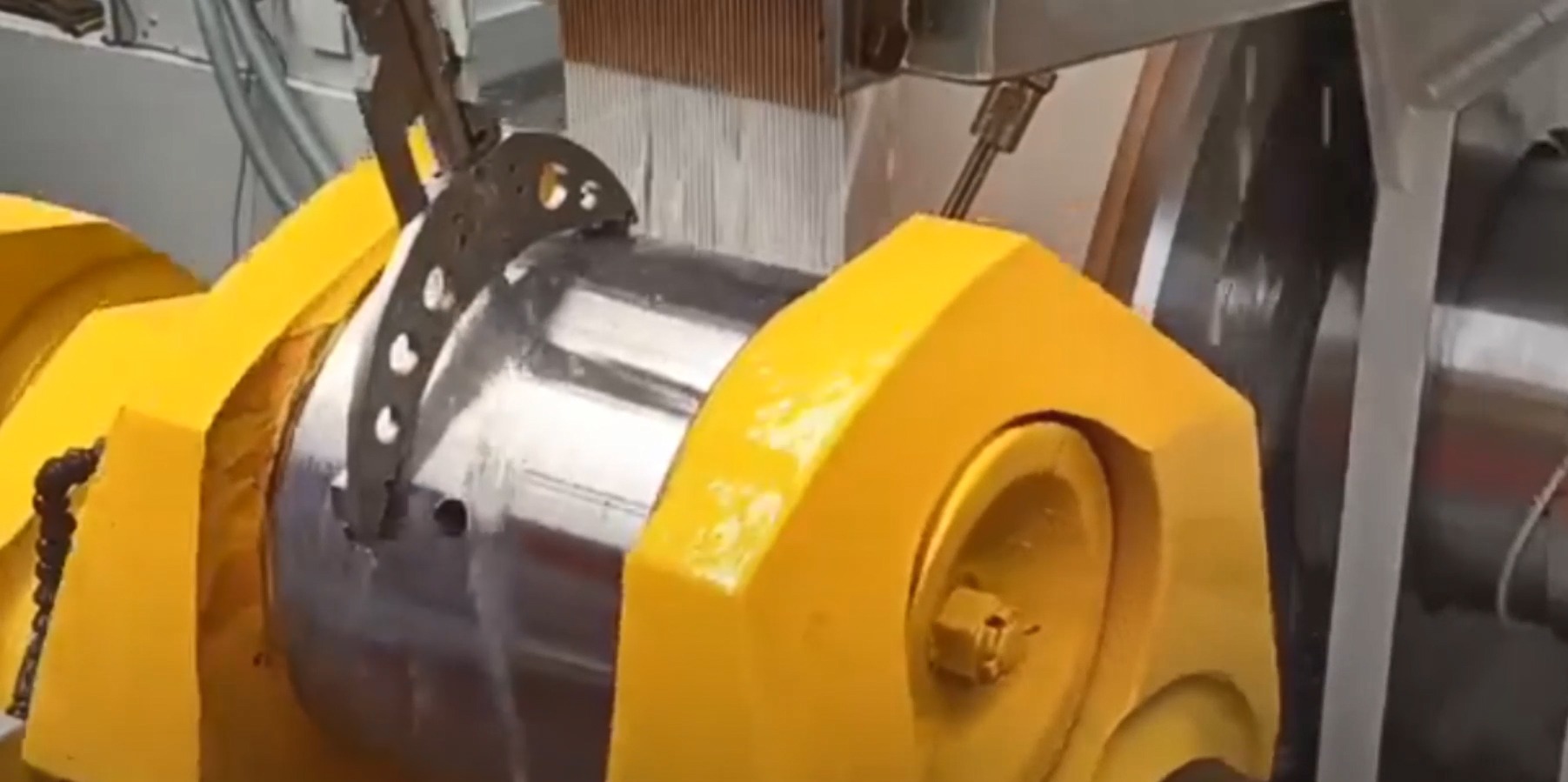
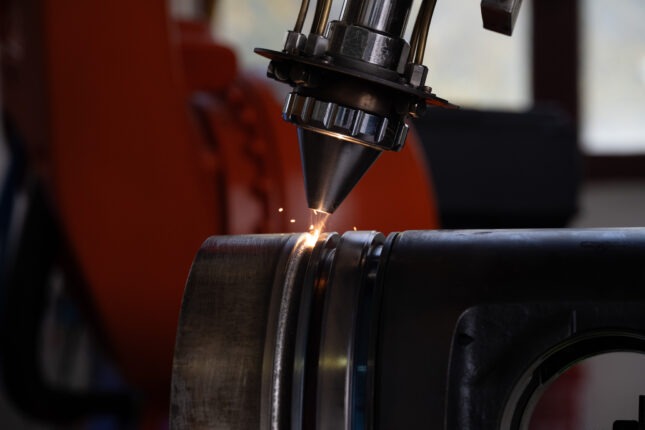
To provide a reliable and cost-effective alternative, KIMI delivers a Bureau Veritas–approved laser cladding repair process developed in collaboration with the National Technical University of Athens (NTUA) and other European research institutes. This advanced method restores crankshafts to their original OEM diameter, providing a high-strength metallurgical bond.
Laser cladding offers minimal heat input, low dilution, excellent metallurgical bonding, and full restoration to OEM dimensions, making it the safest and most effective method for crankshaft reconditioning.




Customer Benefits

Reduced Engine Downtime

Significant Cost Savings vs Crankshaft Replacement

Extended Service Life
Crankshaft Journal Reconditioning Process
INITIAL INSPECTION & CONDITION VERIFICATION
PCN Level II personnel perform dimensional checks, hardness mapping, and NDT (UT / MT / PT) to assess wear, ovality, run-out and determine root cause
PRE-GRINDING
Controlled grinding removes defects and restores a metallurgically sound substrate
LASER CLADDING DEPOSITION
Using state-of-the-art robotic laser cladding systems, ensuring controlled deposition up to ~10 mm radial with minimal HAZ
POST-CLADDING HEAT TREATMENT (IF REQUIRED)
Stress relieving to eliminate residual stresses and stabilize the microstructure
FINAL CNC GRINDING & FINISHING
Precision grinding restores OEM geometry ensuring tolerances, surface roughness, and geometric accuracy
FINAL INSPECTION & CERTIFICATION
PCN Level II personnel perform final NDT and dimensional verification, ensuring OEM compliance and full traceability through certified reporting
Why Rely on KIMI
Crankshaft Restored by Laser Cladding
Maximum Crankshaft Length
BV-Certified Laser Cladding Restoration on Journals
View More Services



News
FAQs
KIMI can recondition crankshafts up to 7 meters in length, with laser cladding restoration up to 10 mm radial build-up on journals.
KIMI, in collaboration with the National Technical University of Athens, established a crankshaft repair procedure using laser cladding in 2013.
Today, KIMI combines Bureau Veritas–approved laser cladding, state-of-the-art precision grinding, and full in-house capabilities to deliver fast, reliable, and OEM-compliant crankshaft restoration, with proven results on 2,000+ components.
Yes, KIMI performs crankshaft straightening to correct bending and restore proper alignment. In addition, hardness is restored and verified through controlled processes and certified testing, ensuring the crankshaft meets OEM mechanical properties and operational requirements.
KIMI repairs crankshafts for a wide range of 4stroke marine engines, including major manufacturers such as MAN Energy Solutions, Wärtsilä, Caterpillar / MaK, Hyundai Heavy Industries (HiMSEN), and other medium- and high-speed engine types used in marine and power generation applications.
KIMI can provide solutions even in cases of extreme crankshaft damage, with typical lead times of 12–20 days, depending on the scope of work. In contrast, purchasing a new crankshaft can take up to 3 months and comes at a significantly higher cost.
This makes reconditioning a faster, more efficient, and highly cost-effective alternative.